

Welcome to The Beginner's Guide to Social Media!

Welcome to The Beginner's Guide to Social Media! Whether you're new to
social media or just looking to close a few knowledge gaps, we're glad
you stopped by. By now, we've all heard how valuable—even
essential—social media can be. Whether your current sentiment leans more
toward enthusiasm or trepidation, there's no way around the fact that
social media is a far more complex field than it first seems. Diving in
without a sense for what it's like can be overwhelming, and building a
network that provides real value takes both savvy and hard work, but
fear not—we're here to help! We hope you'll find this to be one of the
most comprehensive social media resources available, and that no matter
what your skill level is, there's plenty in here to help you improve
your social presence. As an added bonus, we're working on a handy
downloadable PDF version of the entire guide, and hope to have that
ready by early February. What are we waiting for? Let's dive in!
What is social media?
Social media is a way for
people to communicate and interact online. While it has been around
since the dawn of the World Wide Web, in the last 10 years or so we've
seen a surge in both the number and popularity of social media sites.
It's called social media because users engage with (and around) it in a
social context, which can include conversations, commentary, and other
user-generated annotations and engagement interactions.
Publishing content has become exponentially simpler over the
last several years, which has helped skyrocket the use of social media.
Non-technical web users are now able to easily create content on a
rapidly growing number of platforms, including those that are owned
(hosted communities, blogs, etc.), rented (social networks or
third-party communities), and occupied (commenting, contributing, etc.).
Today's web has shifted from a "one-to-many" to a "many-to-many" method
of engagement, and we're loving it.

For businesses, the shift in web consumerism and accompanying rise in
social media brings both opportunity and responsibility. The sheer
amount of data that customers make available through social media alone
has web marketers jumping for joy. The real magic, however, lies in the
opportunity to grow lasting and scalable relationships with your
organization's customer base through social media. This is also where
your online responsibility to your customers begins to take shape. Just
as your customers' behavior has shifted, so have their expectations for
yours. Whether your business is listening and engaging or not, customers
are having conversations relevant to your operations. It's better to be
part of the conversation, right? We sure think so!
Is social media just a fad?
Over the last several years, there has been an explosion of
growth in popular social media platforms like Facebook, Twitter,
Google+, LinkedIn, YouTube, Pinterest, and many others. It's safe to say
that the era of social media is just getting started, and the need for
social media in business will only become stronger over time. The whole
world has seen the impact of the expansion and adoption of social media
tactics, and the rising stats speak for themselves.
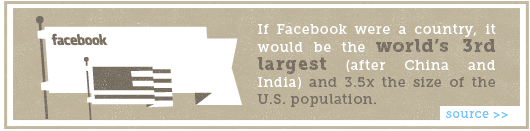
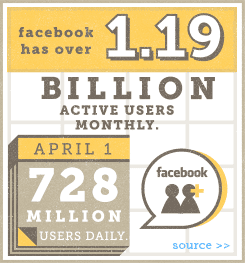
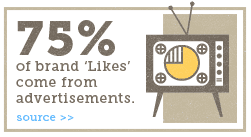
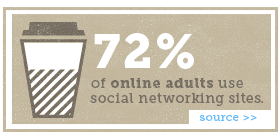
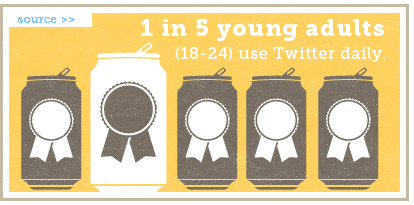
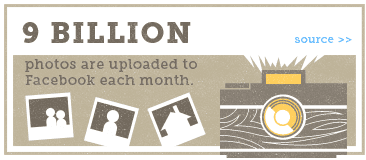
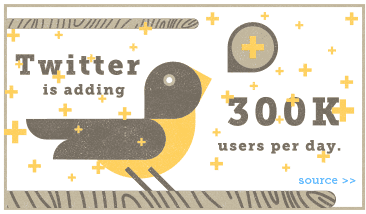
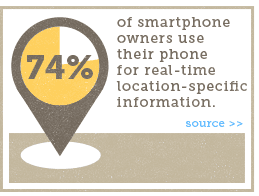

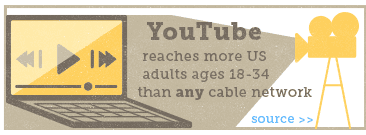
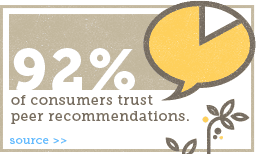
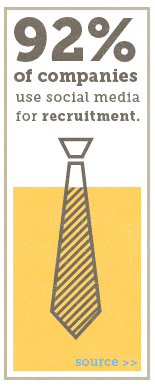

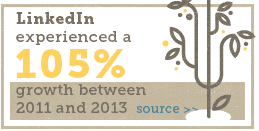
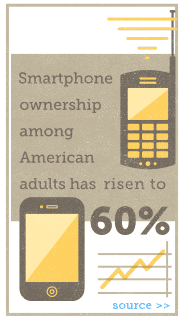

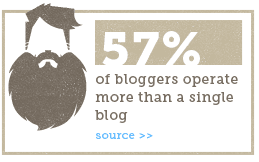
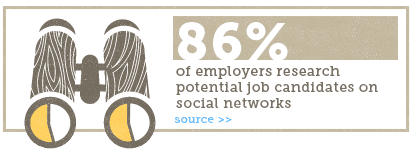 Looking for sources? Click on any of the stats above!
Why does my company need social media?
Whether you are running a small, local operation, or heading a
global, enterprise-level effort, the statistics above make it clear:
Your customers are online. They are interacting in social channels with
their friends, colleagues, and other brands in search of information,
recommendations, and entertainment. If your company is not around to
answer, a competitor will be. In doing so, your competitor will quite
likely take away the customer at hand, along with anyone else listening.
There are tons of opportunities to add value—even to
delight!—and making that connection can help build a person's
relationship with a company, brand, or representative. Those
relationships create the foundation for what can eventually become one
of your greatest marketing assets: customer advocacy.
Because so much of the
customer experience now lives on the web, social media enables brands to
take part in a customer's online experience outside of the typical
channels.

If you ever find yourself in a bind, your advocates will help remind the
rest of the world who they're rooting for. Advocacy is not something
that you can stumble upon or buy. Advocacy is earned over time through
continuous and positive engagement with your customer base. It is earned
through experiences that delight, and through the delivery of the
highest class of customer service.
Advocacy is the nirvana of social media,
and it is through advocacy that your efforts start to truly scale and
grow. It shows that your brand is doing such an amazing job that your
customers shout about your brand from rooftops, sharing their opinions
and experiences with their networks. That sharing is the best marketing a
brand can ask for.
Identifying potential advocates is a good first step. You can
use social tools (many of which are outlined in the rest of this
guide), site data, customer data, and even your own observations to help
you pick out which customers are likely to go to bat for your brand.
You'll want to figure out what is most important to those potential
advocates. What are they looking for? Are they fishing for recognition?
Are they excited by exclusive access to news and/or content? Figure out
what type of advocates your brand attracts and find ways to recognize
them for their advocacy. It is important to note, though, that most of
your greatest community relationships will be built organically. While
your research and brand knowledge encourages people and helps you put
the right foot forward, relationships take time.

The transition from a passive web to an interactive web has brought with it
many changes affecting how individuals connect with one another and
also how businesses operate. At this stage in the game, it's fair to say
that a web presence is critical to the success of a business. You can't
get ahead if you're ignoring your customer's online conversations or
opting to look the other way. Use this opportunity to get closer to your
audience than ever before—reach more people in a genuine and authentic
manner, drive more qualified site traffic, increase the authority of
your brand, engage the people who influence your customers' behavior,
and gain the data necessary for insights-based business decisions.
Maybe a better question is, why wouldn't your company use social media?
How can social be a springboard for success in other marketing channels?
 Keep in mind that neither your customers' experience nor your brand starts with Twitter, Facebook, or your blog.
Social media should take your existing brand and solidify it, galvanize
it, and bolster it. Your efforts in social media should be an extension
of everything else you do in all departments of your company. Capturing
your company's voice and sharing it with the world through social media
will open up unique opportunities in all other channels of inbound
marketing, including SEO, branding, public relations, sales, and more.
Keep in mind that neither your customers' experience nor your brand starts with Twitter, Facebook, or your blog.
Social media should take your existing brand and solidify it, galvanize
it, and bolster it. Your efforts in social media should be an extension
of everything else you do in all departments of your company. Capturing
your company's voice and sharing it with the world through social media
will open up unique opportunities in all other channels of inbound
marketing, including SEO, branding, public relations, sales, and more.Relationships
To get the most out of social media, make the relationships
you build with it your end goal. That might sound a bit utopian for
anyone who is grounded in more traditional and tangible business
measurement and metrics, but take a step back from the bottom-line,
ROI-seeking aspect to look at the big picture for a minute. The
relationships built with customers are the foundations upon which other
aspects of your business can and will flourish.
Relationships flourish when you cultivate them, and no other
area offers you the opportunity to do this as well as social media.
Social channels have broken down the walls between individuals at an
unprecedented rate. In 2011, Facebook released data showing that its
users were, on average, 3.74 degrees of separation away from one another, making them nearly as connected to each other as Kevin Bacon is to the rest of Hollywood.
In the years since that study, the network has only continued to grow.
That's pretty amazing, and social media can take credit for making it
happen.
Some of the most successful SEOs and public
relations professionals earn their notoriety, at least in part, from the
relationships they are able to build. They're also good at what they
do, of course, but great relationships bolster their already solid
effort. The relationships you build with your customers lead to advocacy
and loyalty, traits that can support your brand during both the good
and the bad times, representing an investment that will remain strong on
nearly any platform and under nearly any circumstances.
 Information can be shared through social media at an amazingly fast pace, and users are increasingly turning to
social channels to share information in real-time. This information
often takes the form of opinions, so if you're listening for the right
cues from your audience, social media can become an invaluable source of
insights and feedback. Incorporating social listening into product
development work can act as an early warning system, save on customer
service costs, provide valuable development feedback, and even help
identify ideal beta testers without much expense.
Information can be shared through social media at an amazingly fast pace, and users are increasingly turning to
social channels to share information in real-time. This information
often takes the form of opinions, so if you're listening for the right
cues from your audience, social media can become an invaluable source of
insights and feedback. Incorporating social listening into product
development work can act as an early warning system, save on customer
service costs, provide valuable development feedback, and even help
identify ideal beta testers without much expense.
Social media is not something you can simply "tack on" to the
rest of your marketing, branding, PR, and advertising efforts; it needs
to be a fully integrated part of the mix. In doing so, you can create a
cohesive and scalable experience for your customers. Think of it as a
means to an end, and not an end in itself. Also, it's not as hard as it
sounds.
Be sure to integrate social media into your marketing efforts
as early as possible to help amplify and solidify your work rather than
waiting until the end of a planning cycle to explore social options. If
a social presence is clear from the start, your branding will benefit
from additional customer touchpoints, PR will see a lift in impressions
and reach, and customer service can proactively listen and activate
where necessary.
As you can see, a social presence can have far-reaching
impact for your organization when it is executed in an authentic and
thoughtful manner. By making social engagement a core part of your
operations rather than an afterthought, you have a better shot at fully
leveraging its power.
Share story


